
Norwich Township City Directory Collections
Norwich Township falls within a Franklin County records landscape, so the most useful historical shelf is at Columbus Metropolitan Library. Its house-history guidance places Columbus City Directories at the Main Library, 96 S. Grant Avenue, back to 1841. The annual books commonly give a listed resident, address, and often an occupation. They can be valuable for a Norwich Township question, but a township address may have been outside a particular Columbus volume’s coverage or printed under another locality. Treat each edition as evidence for that edition year.
| Collection | Years | Where Held | Access |
|---|---|---|---|
| Columbus City Directories | Back to 1841; annual | Columbus Metropolitan Library Main Library | Physical, self-serve volumes; confirm coverage for the address |
| Street-by-address directory section | Beginning 1911 | Main Library and included digitized titles where available | Browse by address in the relevant edition |
| Digitized City Directory Collection | Objects from 1843-1945, with gaps | Columbus Metropolitan Library digital collections | Browse a specific title and its metadata online |
| Early Franklin County telephone directories | Collection includes early titles; Hilliards examples in 1936 and 1944 | Library digital and local-history collections | Use as regional lead material, then corroborate |
| Hilliard local newspapers | Hilliards Times 1927-1934; Hilliard Weekly Review 1961-1964 | Columbus Metropolitan Library microfilm inventory | Microfilm research and library inquiry |
The table is a coverage map, not a promise that every Norwich Township household appears. Digital scanning remains in progress, and the physical collection is the practical fallback when a desired year is missing online.
Digitized Norwich Township City Directory Years
The Digitized City Directory Collection is the quickest way to test a year before going to the shelf. Its objects span 1843 through 1945, but gaps remain, so an absent search result can mean only that the title has not been digitized or indexed. Open the title-level record, note the publication year, and compare its city and neighborhood coverage with the historic address.
The library’s digitized directory collection shows the online title-browsing route for Norwich Township city directory research.
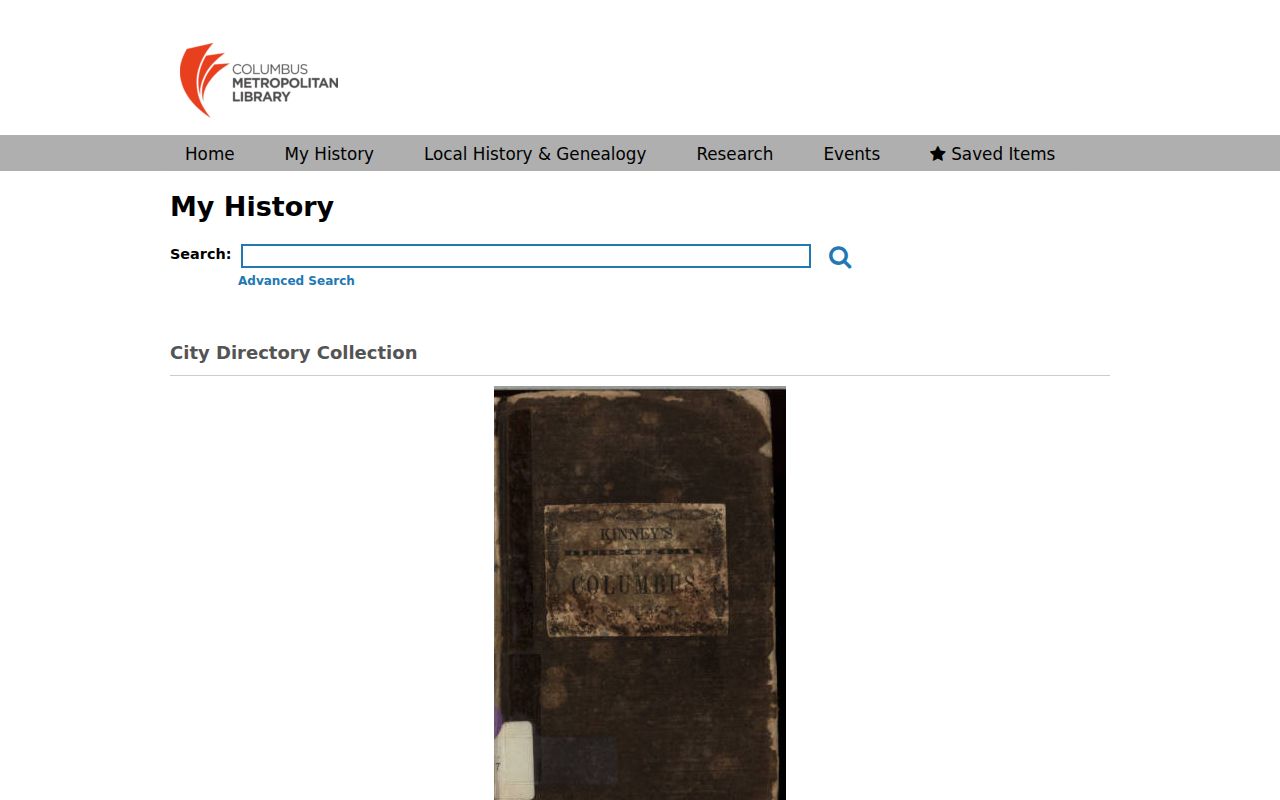
Use the image as a reminder to select a documented edition rather than assuming a continuous run is available on the web. The Main Library’s self-serve directories fill the gaps between online objects.
Early Franklin County telephone books belong beside, not inside, the city-directory evidence. The known 1936 Franklin County phone book and 1944 Columbus telephone directory include Hilliards among the communities served. A phone entry can support a time-and-place lead, while the directory edition, deed, or census supplies the necessary context.
Norwich Township City Directory Access Routes
A missed digital year does not end the search. Browse the online collection for a title that is present, then use the Main Library’s physical self-serve Franklin County directories for the volume that is not. Local History & Genealogy also maintains the Columbus and Ohio Information File, a card-file source for people and topics that can supply a surname, school, building, neighborhood, or organization lead. Staff help is most productive when the request identifies a year, address, or title rather than asks for a broad name search.
For related material, the library’s house-history route links directories with Auditor records and historic maps. The Ohio History Connection Archives & Library is the broader archival fallback for historical death research and state or local-government archival discovery. In person, it offers research-room access and its own research and copy procedures. For a discrete government record outside those collections, use the actual custodian and a focused Ohio Public Records Act request rather than asking a library or archive to create a genealogy report.
Reading a Norwich Township City Directory Entry
A city directory entry is compact, and its meaning rests on the book in hand. The basic inventory is reliable: an alphabetical name, a residence address, and often an occupation. Some editions provide more marks, but the abbreviation page and publisher’s notes control their meaning. Do not carry a symbol from one year into another without checking that volume’s key. A listed occupant is not automatically the parcel owner, and initials or common surnames need a second record before they become a family connection.
| Alphabetical name | Shows that a person or household was indexed in that edition; compare initials and surname variants. |
|---|---|
| Street address | Places a listed residence or occupancy location in the publisher’s annual compilation. |
| Occupation | Often provides a period clue, not a statement about a present-day role. |
| Street-by-address listing | From 1911, can show the occupant the volume places at an address. |
| Edition key | Explains abbreviations and any publisher-specific notation used in that year. |
- Criss-cross directory
- A street-order portion of a later directory that lets a reader work from an address toward the occupant printed for that edition.
- Householder index
- An alphabetical finding aid for a household or named resident, useful before checking the address section.
- Abbreviation key
- The publisher’s explanation of shortened labels and symbols, usually near the front of the particular volume. Photograph or transcribe it with the entry.
Note: A directory supports an annual occupancy clue, while a recorded deed or Auditor record answers the separate ownership question.
Norwich Township City Directory Streets After 1911
The 1911 addition of a street-by-address section changed how a historical address can be investigated. Before that point, start with the alphabetical listing, surname variations, a legal description, or a nearby community term. From 1911 onward, the street section provides a direct way to check who the edition placed at a numbered address. It remains a printed occupant record, not an ownership ledger and not a census of all occupants.
This distinction matters in a township with mixed Hilliard, Columbus, and unincorporated-area identities. A historic address may use a different city label, have a changed number, or fall outside a volume’s limits. Compare the printed street spelling to the edition’s own key and then test the parcel’s legal description with the Franklin County Auditor Property Search before declaring that two differently labeled addresses are the same place.
Hilliard Sources Beside Norwich Township City Directories
Hilliard materials provide narrower local layers for families and places near the township. The Hilliard Ohio Historical Society library at 5274 Norwich Street holds family files, local newspapers, books, photographs, maps, and related historical material. Its family files are leads, not final proof, so compare a name or address with a primary record. Posted regular research hours are Monday, Wednesday, and Thursday from 10 to 2, with Tuesday and Friday appointments.
Hilliard History Express adds digitized local artifacts and school-linked historical materials. Those sources can help frame a school, neighborhood, or family question that a city directory only hints at.
Local-history material is most useful when its date and place line up with a directory entry. It should not be used to turn a surname mention into an unverified household claim.
Trace Norwich Township City Directories with Census
For family history, move in short intervals rather than jumping from one decade to the next. Start with a known name, address, alternate number, or legal description. Record the exact form used in one directory. Then compare the closest later or earlier edition and look for an address move, a changed spelling, or a missing listing. Pair that annual clue with the nearest released federal census, which reaches through 1950, while remembering that the census date and the directory compilation date are different.
- Find the surname in an alphabetical listing and capture the edition year, printed name, address, and clearly labeled details.
- Check a nearby edition for the same household, an alternate spelling, or a change in street number.
- For 1911 and later, compare the street-by-address section with the alphabetical result.
- Use the National Archives census research gateway to locate the closest released census household and verify its enumeration geography.
- Test a property connection through the Auditor or Recorder, then use Probate, obituary, or cemetery material only as corroboration.
A disappearance may reflect a move, death, a changed address number, a spelling issue, exclusion from that title, or a different geographic label. It is a prompt to check the next record, not a conclusion by itself.
The National Archives census research route provides the federal household layer that sits alongside a Norwich Township city directory year.
Census and directory evidence answer different time-specific questions. A match is useful corroboration; a mismatch may point to a move, a compilation difference, or a geographic boundary issue.
Norwich Township Directory Research Through Change
The historical record trail around Norwich Township predates modern mailing labels. Franklin County was established in 1803 and Norwich Township was organized in 1813. Hilliard’s development, its original plat, later subdivisions, and changing service areas can affect how a place appears in a book or map. Search the relevant locality terms and verify the parcel or plat instead of assuming that a modern mailing city governed the earlier record.
- 1841: Main Library city-directory holdings begin.
- 1911: the documented by-street section begins in the Columbus directory series.
- 1927-1934: Hilliards Times offers a local newspaper period on the library microfilm inventory.
- 1961-1964: Hilliard Weekly Review adds another local newspaper run.
- 2022: the Recorder’s cloud public search began, adding an OCR and full-text lead-finding route for recorded documents.
The Recorder’s later search tools can assist with property corroboration, but an old directory does not become an ownership record merely because a name appears in both places. For a living-person verification question, use the appropriate current custodian rather than extending a historical city directory beyond its purpose.