
Norwich Township Resident Lookup Records
A name search has to match the custodian to the question. The Franklin County Auditor Property Search can show that a name occurs in an owner record and point to a parcel. The Recorder can confirm a recorded party and legal description. CIO supplies an online docket copy for certain courts, while Probate has the county marriage, estate, guardianship, and name-change routes. Each item is evidence of a limited fact, not a complete account of who presently lives at an address.
| Record | What It Confirms | Where | Access |
|---|---|---|---|
| Property record | A name in an owner record and the related parcel context. | Franklin County Auditor Property Search | Public search; ownership is not a household record. |
| Recorded instrument | A grantor or grantee, document, date, and legal description. | Franklin County Recorder | Cloud and legacy search routes; confirm the document image. |
| Court docket | A public case lead under a name in CIO-covered divisions. | Case Information Online | Convenience copy only; the courthouse file controls. |
| Probate or vital record | A marriage, estate, guardianship, name-change, or historical event trail. | Franklin County Probate Court or ODH | Copy routes and confidentiality rules vary by record. |
| Voter or license record | An individual registration check or official credential connection. | Ohio voter search or eLicense Verify | Individual and status tools, not present-residence proof. |
Begin with an address only when it is already known, then compare the parcel identifier and situs, or property location, before associating it with a person. For a historical question, start with the time window and a former or maiden name. The Recorder's modern deed index begins January 2, 1914, while its historical indexes cover 1804 through 1913. A resident lookup that skips those distinctions can combine records for different people who share a name.
Note: A recorder party, property owner, voter-search match, and listed occupant are different record facts.
CIO Fields for Norwich Township Names
The Clerk's Case Information Online search covers Common Pleas General Division civil and criminal cases, Domestic Relations matters, and Tenth District Court of Appeals docket information. Franklin County Municipal Court uses a separate clerk search. CIO is useful for a case lead, not for assuming that one county search reaches every Ohio court or that a docket establishes a current address.
| Field Label | Type | Required | Options / Format Notes |
|---|---|---|---|
| Last Name | Text | No | Name-search field; use with other details when available. |
| First Name | Text | No | Supports a more focused name search. |
| Middle Initial | Text | No | One-character or name refinement. |
| Court | Dropdown | No | Limits results to a Clerk-served division. |
| Case | Segmented inputs | For case-number search | Year, case type, and number; codes include CV, CR, DR, and EP. |
| Name of / Attorney Number | Dropdown / text | No | Party-role and attorney refinements. |
| Filed From / Filed To | Date inputs | No | Narrow results to a filing period. |
A case number is more reliable than a name alone. When only a name is available, compare the court, case category, filing date, party role, and another independent official record before treating the docket as a match. Sealed, restricted, juvenile, federal, probate, municipal, or out-of-county matters can be absent from CIO. The Clerk lists Legal Division assistance at 614-525-3600 and directs questions about an official document or certified copy to the courthouse file.
Verifying a Norwich Township Resident
Use a modest chain of independent facts to look up a resident accurately. A common surname, a parent and adult child, or a changed surname can make a plausible result wrong. The safest sequence begins with a property record only where ownership is relevant, then tests the land record and an appropriately scoped court or Probate record. Do not infer present residence from a deed, a docket caption, a historical directory, or a license result.
- Search the Auditor's Owner Name mode if the person may own property. Open the result only after the parcel address and parcel identifier fit the known location or time period.
- Use the Recorder party search for that name and a date range. Compare grantor or grantee role, document date, and legal description with the parcel rather than relying on a street-name match.
- Run CIO with name variants and, when possible, a court and filed-date limit. Compare party role and case date against the independent parcel or recorded-document lead.
- For a relationship or historical name change, use Probate's marriage, estate, guardianship, or name-change channels and order a copy only from the custodian.
The normal CIO result inventory includes party name and role, court or division, a case identifier, filing and docket dates, entries, and a case category. Those fields help distinguish similar names. They do not replace the original file, and CIO does not promise large-scale downloads. A precise question about an official filing should name the case number, document title or docket date, and desired copy format when contacting the Clerk.
- Docket
- A court's running list of filings, events, and entries in a case. An online docket can be a convenient copy rather than the official file.
- Index versus image
- An index helps locate a record by fields such as name, date, or number. The image is the scanned document itself and may contain the context needed to verify the index entry.
- Certified copy
- A copy issued and certified by the custodian for a record purpose. It is not the same as a search result or ordinary screen display.
Norwich Township Probate Record Routes
Franklin County Probate Court is the direct route for marriages, estates, guardianships, and name changes. The court reports marriage licenses and abstracts from 1803 to the present, and estates, guardianships, and name changes from 1898 to the present. Older birth and death holdings sit with the county for 1867 through 1908. For later periods, the Ohio Department of Health Vital Statistics is the statewide starting point for post-1908 births and post-1944 deaths, while Ohio History Connection holds the stated 1908 to 1944 death period.
For a Franklin County certified marriage abstract, the license must have issued in the county and the officiant must have returned the signed certification. Probate asks the requester to search its Marriage License Index and check for a Certif Returned date. Online, mail, email, and counter channels are available. A mail request identifies both applicants, including a maiden or prior surname where helpful, an approximate year, telephone number, payment, and a self-addressed stamped envelope. Probate receives record-search requests at probate@franklincountyohio.gov and may confirm the cost before copying.
Vital access is not a shortcut to locate a living person. ORC 3705.23 governs ordinary certified vital-copy issuance to a signed applicant who pays the fee unless an exception applies. Adoption and original-birth records have separate confidentiality rules. If a record is needed for family, estate, or historical research, ask the issuing office what copy and eligibility rules apply to that record type.
Norwich Township Voter Lookup Limits
Ohio My Voter Information is an individual tool. It requires First Name, Last Name, and County, with Franklin County selected for Norwich Township. Its visible purpose is to check registration and find precinct and polling-location information. Search tips suggest a first-name derivative, former surname, or prior Ohio address when a person is checking their own record. The later street-name narrowing control does not create an address-first browse of everyone on a street.
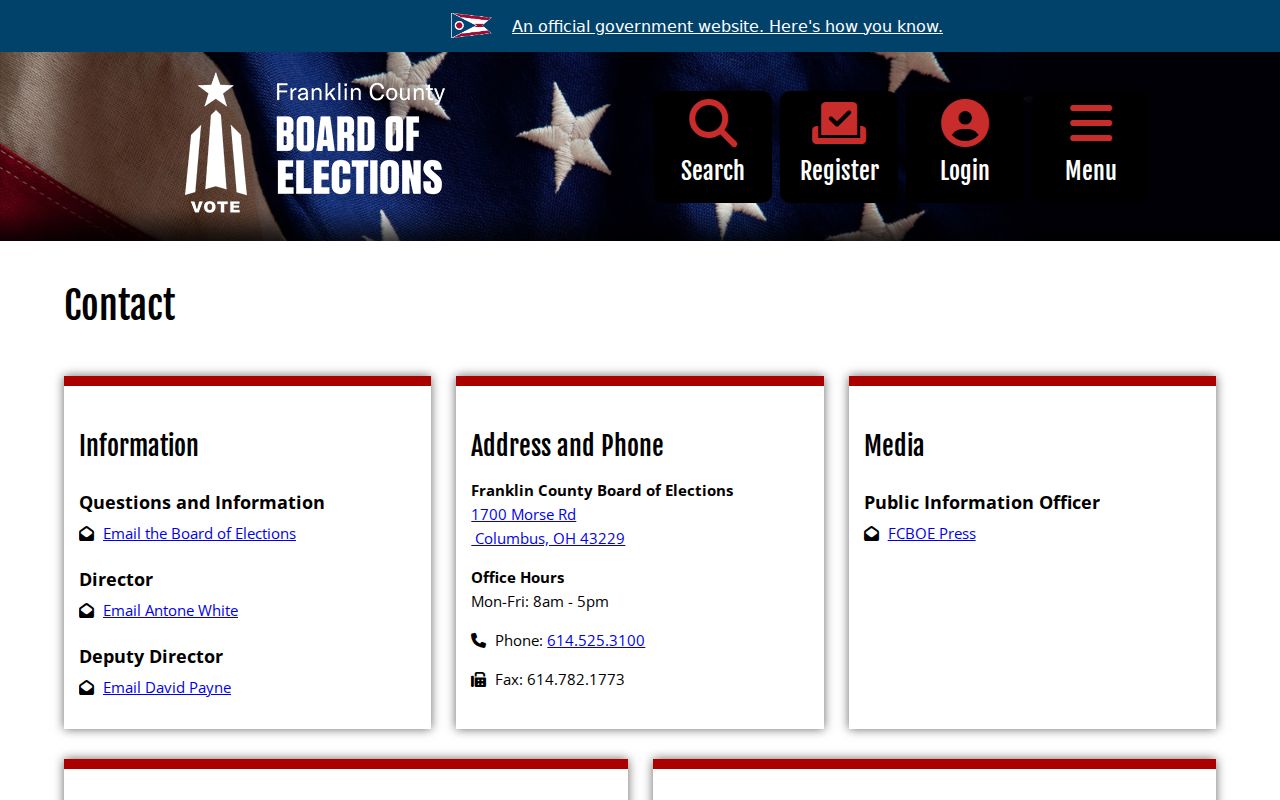
The Franklin County Board of Elections contact route is the local fallback for registration questions, precinct boundaries, correction questions, or a narrowly described public-record request. A request should identify an existing record and time period, allow redaction of protected information, and cite the Ohio Public Records Act, ORC 149.43. It should not ask the Board to create a name list by street.
Use the Franklin County Board of Elections contact source when the state form cannot settle an individual voter question.
Norwich Township License Connections
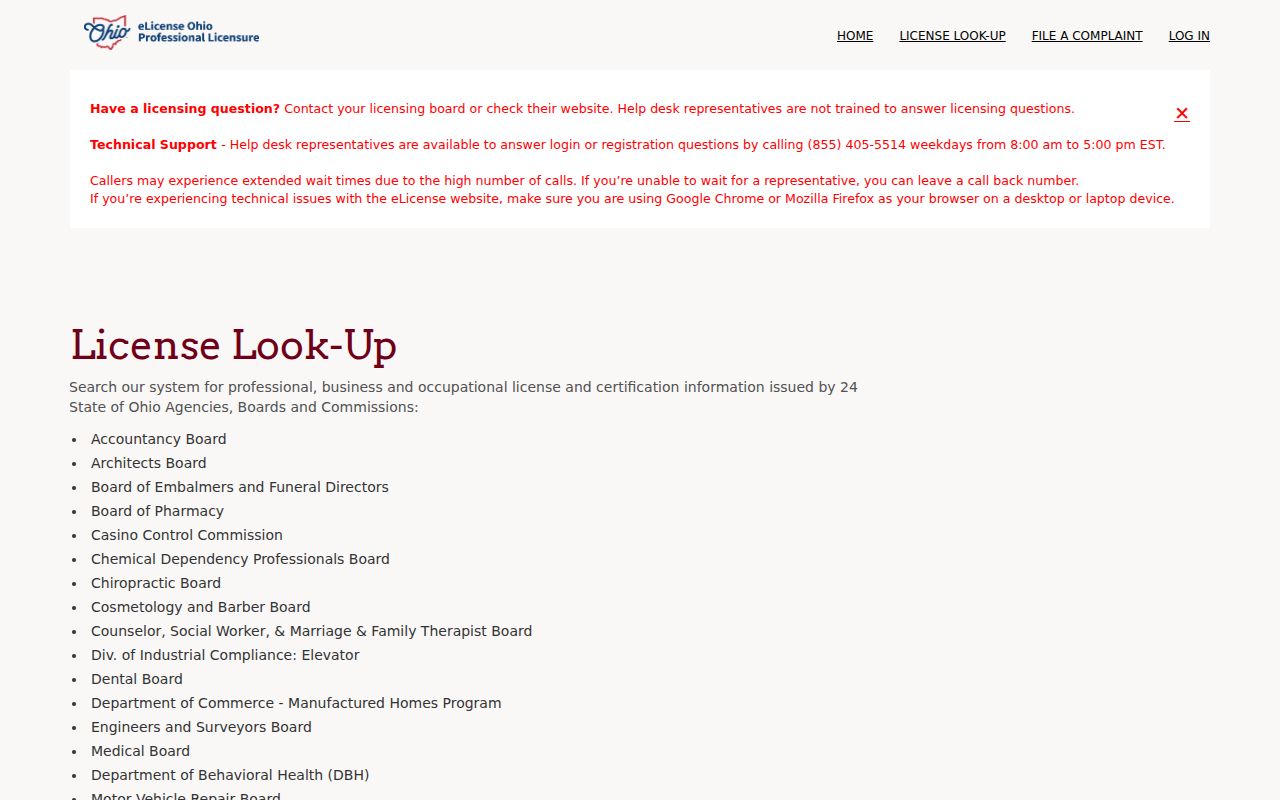
Official business and credential systems can confirm a limited legal connection. Ohio Business Central records an entity, officer, statutory agent, filing date, status, and documents where available. Ohio eLicense Verify covers information issued by 24 participating boards, agencies, and commissions. Neither source establishes where a person lives. Treat a business address, officer role, or eLicense city and state as the record's own description, then confirm any separate property or court question through its actual custodian.
eLicense supports a last-name plus first-initial and board search, or an exact license number with its prefix, suffix, and punctuation. A result can show the recorded holder name, status or sub-status, board, license type and number, issue, effective, and expiration dates, city, state, country, and where applicable endorsements or discipline indicators. The portal says data may be incomplete and subject to its disclaimer.
See the Ohio eLicense Verify source for the official credential-search starting point.
Norwich Township Record Request Fallbacks
When a useful record is offline or incomplete, ask the office that keeps it for an existing, identified record. Ohio's Public Records Act, ORC 149.43, requires public offices to make nonexempt records available for prompt inspection and copies within a reasonable period. A requester generally need not give a reason, identity, or written request unless the office explains that each is optional and why it helps. Lawful redactions remain possible.
For a CIO record, name the case number and document or docket date. For an older Probate item, provide the names, approximate event year, and record type. For a recorded document, include the party name, date range, and known legal description or document number. The Norwich Township Street Directory has the fuller address-to-parcel workflow when a known street needs to be matched to land records. A missing online result can reflect a variant name, a different custodian, an older format, a lawful restriction, or a move outside the county.
Note: Asking for an existing record is different from asking an office to assemble a new personal directory.
Norwich Township Resident Lookup Limits
Ohio Safe at Home is an address-confidentiality program for eligible people facing specified safety risks. A participant uses a Secretary of State substitute address, and ORC 111.43 also permits a real-property confidentiality notice with the county recorder. Protected addresses can be absent or redacted, so a property, voter, court, or other result that does not appear online is never proof that a person is not present. Voter protections also cover confidential information and protected voter categories under ORC 3503.13.
The same restraint applies to ordinary records. An owner is not necessarily the resident. A recorded party is not necessarily the current owner. A court docket copy is not the official file. Correct an apparent error with the agency, court, or office that maintains the record instead of repeating it. A named record can support family history, estate work, reconnecting, or a lawful personal question only after the relevant facts agree.